Choosing the right tablecloth begins with more than matching a color to your event theme. Table shape, tabletop dimensions, chair clearance, and the desired drop all affect the final fit. Tablecloth Sizing becomes much easier when you measure the table before shopping.
A practical formula is simple: tabletop width plus twice the desired drop. For a 60-inch round table, a 120-inch cloth reaches the floor. A 90-inch cloth creates an approximately 15-inch drop. That difference changes the entire appearance. Guests may see chair legs, or they may struggle with excess fabric around their knees.
The American Express Global Business Travel 2025 Global Meetings and Events Forecast emphasizes the continuing importance of in-person experiences and thoughtful event details. The Knot’s 2024 Real Weddings Study also reports that couples continue investing heavily in guest experience and reception presentation. These findings support careful linen planning, especially for weddings, restaurants, conferences, and catered celebrations. Still, published sizing charts are not always consistent. I have seen “floor length” described differently by suppliers, so verify every measurement in inches or centimeters. Measure the table height, not only its diameter. Check the hem, fabric shrinkage, and laundering instructions. A cloth that looks perfect in a product photo may puddle on a standard banquet table. Small errors become obvious under bright venue lighting. Good sizing protects the table’s appearance, improves guest comfort, and reduces last-minute replacement costs. This guide explains how to select a reliable size for common table shapes and practical event settings.
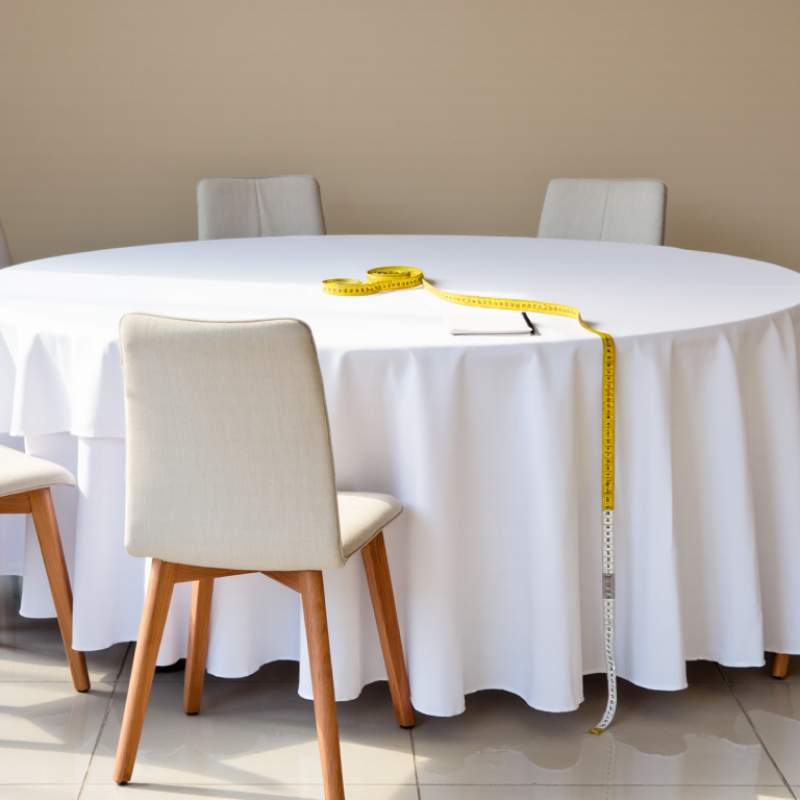
Tablecloth Sizing Guide: What Size Do I Need?
Understanding Tablecloth Shapes and Table Dimensions
Choosing a tablecloth begins with the table’s shape, not its seating capacity. Measure the tabletop length and width for rectangular or square tables. For a round table, measure straight across the center to find its diameter. Extend the measuring tape from edge to edge. Do not measure around the rim.
A practical tablecloth size includes the desired drop on every side. Add twice the drop length to each tabletop measurement. For example, a 60-by-36-inch rectangular table needs a cloth measuring 80 by 56 inches for a 10-inch drop. A round table with a 48-inch diameter needs a 68-inch round cloth. Square tables usually suit square cloths, while oval tables need oval fabric to avoid awkward corners.
Shape matters more than many shoppers expect. A rectangular cloth may cover an oval table, but the corners can hang unevenly. I have made this mistake myself. The table looked acceptable from one angle and untidy from another. For everyday dining, a 10-to-12-inch drop often feels practical. Formal settings may use a longer drop, sometimes reaching near the floor.
Check the table’s height and any center extensions. Measure again after opening the leaves. Fabric thickness, washing shrinkage, and rounded edges can slightly change the final fit. The formula helps, but it is not perfect. A quick floor check prevents surprises.
Use the table dimensions and desired drop length below to choose a tablecloth size. A typical dining-table drop is 10–12 inches (25–30 cm), while a formal or floor-length drop may extend to the floor.
| Table Shape | Table Dimensions | Recommended Drop | Tablecloth Size | Approximate Metric Size | Best Use |
|---|---|---|---|---|---|
| Round | 36 in diameter | 10–12 in | 56–60 in round | 142–152 cm round | Small breakfast or café table |
| Round | 48 in diameter | 10–12 in | 68–72 in round | 173–183 cm round | Four-person dining table |
| Round | 60 in diameter | 10–12 in | 80–84 in round | 203–213 cm round | Six-person dining table |
| Round | 72 in diameter | 10–12 in | 92–96 in round | 234–244 cm round | Eight-person dining table |
| Square | 36 × 36 in | 10–12 in | 56 × 56 in | 142 × 142 cm | Four-person square table |
| Square | 48 × 48 in | 10–12 in | 68 × 68 in | 173 × 173 cm | Four- to six-person dining table |
| Square | 60 × 60 in | 10–12 in | 80 × 80 in | 203 × 203 cm | Six- to eight-person dining table |
| Rectangular | 60 × 36 in | 10–12 in | 84 × 60 in | 213 × 152 cm | Four- to six-person table |
| Rectangular | 72 × 36 in | 10–12 in | 96 × 60 in | 244 × 152 cm | Six-person dining table |
| Rectangular | 84 × 42 in | 10–12 in | 108 × 66 in | 274 × 168 cm | Six- to eight-person table |
| Rectangular | 96 × 48 in | 10–12 in | 120 × 72 in | 305 × 183 cm | Eight- to ten-person table |
| Rectangular | 120 × 48 in | 10–12 in | 144 × 72 in | 366 × 183 cm | Ten- to twelve-person banquet table |
| Oval | 60 × 36 in | 10–12 in | 84 × 60 in oval | 213 × 152 cm oval | Four- to six-person oval table |
| Oval | 72 × 42 in | 10–12 in | 96 × 66 in oval | 244 × 168 cm oval | Six-person dining table |
| Oval | 84 × 48 in | 10–12 in | 108 × 72 in oval | 274 × 183 cm oval | Six- to eight-person table |
| Rectangular | 72 × 36 in | Floor-length, approximately 30 in | 132 × 96 in | 335 × 244 cm | Formal event or banquet setting |
| Round | 60 in diameter | Floor-length, approximately 30 in | 120 in round | 305 cm round | Formal dinner or event table |
Measure the tabletop’s length and width at the widest points. Keep the tape flat. Add the preferred drop twice to each measurement.
Add 50 centimeters to both dimensions. The cloth should measure about 250 by 150 centimeters.
Measure the diameter straight through the center. Add twice the desired drop to that diameter.
A 15-to-20-centimeter drop feels relaxed and practical. It keeps fabric away from children’s hands. Shorter often feels safer outdoors.
A 25-to-38-centimeter drop looks more polished. Floor-length styles should stop about 1.3 centimeters above the floor.
Yes, include every leaf you plan to use. Seams can change the required size considerably. Measure the fully extended table.
Yes, especially with natural fibers. Even 2% shrinkage removes 4 centimeters from a 200-centimeter cloth. Check the care label before buying.
Place the cloth on the table and inspect every corner. Sit down and check the fabric’s reach. Stand back at floor level.
Correct it when practical, but handmade fabric may remain slightly uneven. I once trusted a quick measurement and regretted it. Perfection is not always realistic.
Choosing the right tablecloth begins with understanding your table’s shape, dimensions, and intended use. Round, square, rectangular, and oval tables each require different sizing methods, so accurate measurements are essential. Measure the tabletop’s length, width, or diameter, then consider the desired drop—the amount of fabric hanging over the edges. A shorter drop creates a casual look, while a longer drop offers a more formal appearance and may reach closer to the floor.
This Tablecloth Sizing guide explains how to calculate the ideal cloth size by adding twice the preferred drop length to the table’s measurements. It also helps match tablecloth dimensions to standard dining, banquet, cocktail, and folding tables. By combining precise measurements with the right drop for the occasion, you can achieve a balanced fit that looks neat, functions comfortably, and complements both everyday meals and special gatherings.

 Jiayuan