For wholesale buyers, Fabric Tablecloths are practical inventory—not merely a finishing touch. They must handle repeated laundering, long service hours, and changing event styles. A white polyester cloth may suit a busy banquet hall; textured cotton or linen blends can better complement boutique dining rooms. Small details matter. Check seam strength, stain visibility, color consistency, and the cost of replacement.
The opportunity is substantial, but broad market figures need careful interpretation. Grand View Research estimated the global home textiles market at about US$127.9 billion in 2023 and projected continued growth through 2030. That category includes many products, not tablecloths alone. Textile Exchange’s Materials Market Report 2024 estimated global fiber production at 124 million tonnes in 2023, highlighting the scale and complexity of material sourcing. Neither figure guarantees demand for a particular fabric or finish. Buyers still need to test samples against their own washing routines.
Design matters, too. British textile designer William Morris advised, “Have nothing in your houses that you do not know to be useful, or believe to be beautiful.” For table linens, both standards count. Yet beauty can fade after repeated hot washes, and a low unit price may conceal weak hems or inconsistent dye lots. This guide compares fabric choices, durability, care requirements, and wholesale considerations for 2026. Use it as a starting point, then verify specifications with suppliers and request physical samples.
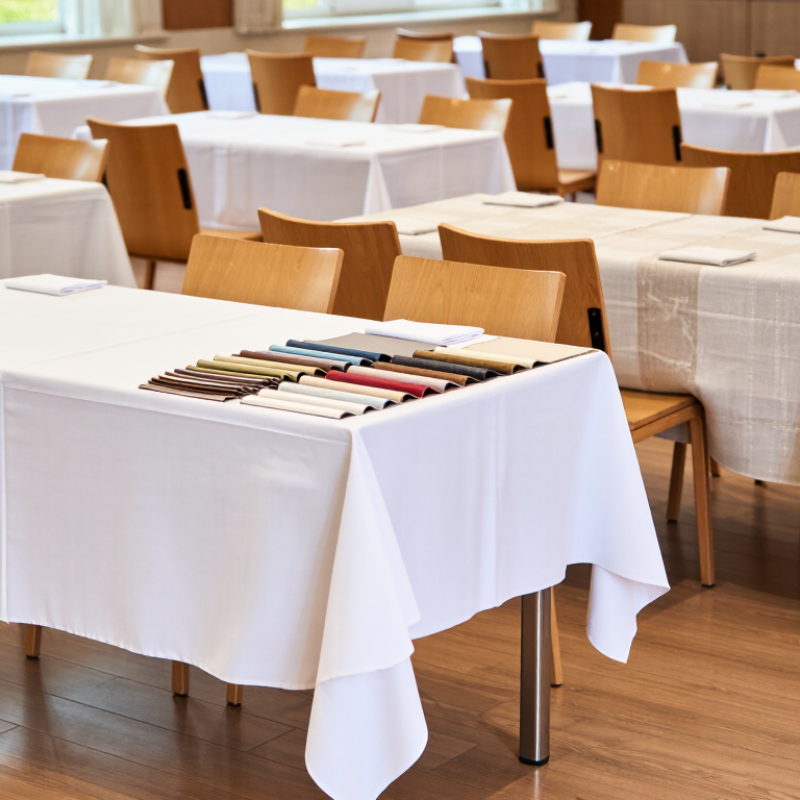
Wholesale buyers in 2026 should assess fabric tablecloths by more than color and unit price. Grand View Research estimated the global home textiles market at USD 127.05 billion in 2023, with projected annual growth of 6.0% from 2024 to 2030. This broad category includes many products, not tablecloths alone. Still, it signals a substantial market where consistent quality and dependable replenishment matter. Check fabric weight, fiber content, seam finish, and stated care instructions before comparing quotes.
Tips: Request a cut sample and a finished-size sample. Wash-test both. Check for shrinkage, fading, curling hems, and stains from common foods. Record the results against the supplier’s specifications.
Cotton and linen offer a natural texture, but can wrinkle and need careful laundering. Polyester blends often resist creasing and suit frequent-use venues, though hand-feel varies by weave and finish. Ask suppliers to confirm tolerances for dimensions and color between production lots. A single sample can still mislead; batch variation may appear only after a larger order. That is an inconvenient gap, so consider a small pilot purchase before committing to repeat-volume quantities. Keep the specification sheet, test notes, and approved color sample together for reorders.
Finished Tablecloth Width by Desired Drop for a 30-Inch-Wide Table
Finished width is calculated as table width plus twice the desired drop. These figures exclude fabric allowances for hems and any shrinkage, so wholesale buyers should account for both when specifying cut sizes.
Polyester usually offers the lowest purchase cost and dependable color retention, making it practical for busy banquet rooms. It dries quickly and resists wrinkles, but can feel less breathable under warm lights. Cotton has a softer hand and absorbs spills, yet it wrinkles and may shrink if laundering is too hot. Linen brings a distinctive slub texture and a premium look, but usually costs more and creases readily. Not always. Blend ratios, fabric weight, weave, stain finishes, and hem quality can change both price and performance.
Supply scale matters, but it is not a price quote. Textile Exchange’s Materials Market Report 2024 estimates global fiber production at 124 million metric tonnes in 2023; polyester represented 57%, while cotton represented 20%. Those figures suggest broad material availability, not guaranteed wholesale savings.
Buyers should compare delivered cost per wash-ready cloth, rather than fabric price alone. Ask suppliers for fabric weight, shrinkage guidance, colorfastness results, and sample pieces; then wash samples using the intended laundry cycle. A lower-cost cloth can become expensive when hems fray or replacement orders arrive in mismatched shades.
I would still test real spills. Lab claims do not fully predict a busy service day.
For high-turnover banquet service, polyester tablecloths are practical: they dry quickly, resist creasing, and usually need less pressing between events. Textile Exchange’s Materials Market Report 2024 estimated global fiber production at 124 million metric tonnes in 2023, with polyester accounting for 57 percent. That figure describes the wider fiber market, not tablecloth demand, but it shows polyester’s broad manufacturing base. Cotton suits cafés and restaurants that value a soft, breathable hand and absorbency. It can wrinkle and may shrink if care instructions are ignored. Small details matter.
Cotton-polyester blends offer a middle ground for daily dining: they feel less synthetic than pure polyester while generally laundering more easily than cotton. For premium settings, linen brings texture and a relaxed drape, but deep creases are part of the deal. Outdoor use calls for polyester designed for UV exposure and moisture; the fiber alone does not guarantee weather resistance. Ask suppliers for fabric weight, weave, finish, and test results, then wash a sample using the venue’s actual cycle. A neat specification still misses one thing: real laundry-room handling. Not always predictable.
For wholesale buyers, fabric quality is a repeat-cost decision. Textile Exchange’s Materials Market Report 2024 estimates global fiber production reached 124 million tonnes in 2023, with polyester accounting for 57%. That scale makes fiber content worth checking, but it cannot predict a tablecloth’s service life. Request fiber composition, fabric weight, weave details, and a sample from the production lot. Wash it, dry it, and inspect shrinkage, color transfer, seam puckering, and corner shape. AATCC TM 135 assesses dimensional change during home laundering; TM 61 tests colorfastness to laundering. Not enough. Record results against your own care routine.
Supplier reliability needs evidence beyond a polished sample. The U.S. EPA’s 2018 Facts and Figures report estimated 17 million tons of textile waste were generated in the United States, with 11.3 million tons landfilled; these figures cover textiles broadly, not tablecloths specifically. Longer product life may reduce replacement, but only if care instructions fit real operations. Ask suppliers for written tolerances, care guidance, lot identification, production capacity, lead times, and defect-resolution terms. A catalog swatch can mislead. Approve a preproduction sample, then compare delivered goods with it under consistent lighting. I would still treat any single test as incomplete; laundering methods differ between kitchens, hotels, and rental services. Get commitments in writing.
Compare quotes by finished specification, not by the price per piece alone. Request fabric composition, weight, weave, hem width, and care instructions in writing. A 60-inch round cloth with a narrow hem is not equivalent to one with a deep, weighted hem. Small details change labor and material use. Ask whether freight, packaging, sampling, and setup fees are included.
Small lots cost more. Confirm the minimum order quantity for each color and size, since suppliers may set separate minimums for custom runs. A low unit quote can become expensive when mixed sizes require separate production batches.
Customization needs its own line-by-line comparison. Check available colors, print methods, logo placement, fabric substitutions, and sample charges. Request a preproduction sample, then inspect it under the lighting used at your venue; color can look different on a screen.
Textile Exchange’s Materials Market Report 2024 estimates global fiber production reached 124 million tonnes in 2023, with polyester making up 57%. That figure covers the wider fiber market, not tablecloths, but it shows why composition should be verified rather than assumed.
Ask suppliers to identify the fiber blend and tolerances, and document approved samples. One imperfect reality: samples may not capture bulk-run variation. Include acceptable color and measurement tolerances in the purchase terms.
Polyester dries quickly and resists creasing, so it can reduce pressing between events. Test a sample with your actual laundry cycle. Results may vary.
Cotton feels soft and breathable, and it absorbs spills well. It can wrinkle or shrink if care instructions are ignored. Small details matter.
Linen offers texture and a relaxed drape, but deep creases come with it. For outdoor use, choose polyester made for UV exposure and moisture. Fiber alone does not guarantee weather resistance.
Request the fiber content, fabric weight, weave, and a production-lot sample. Wash and dry it, then inspect shrinkage, color transfer, seams, and corners. Not a perfect prediction.
Ask for written care guidance, measurement tolerances, lot identification, lead times, production capacity, and defect terms. Compare delivered goods with the approved sample under consistent lighting.
Compare finished specifications, not just the unit price. Check hem width, fabric details, care instructions, freight, packaging, sampling, and setup fees. Small lots may cost more.
Ask for the minimum quantity for each size and color. Custom runs may require separate production batches, which can raise costs. Check before approving.
Review color options, print methods, placement, fabric substitutions, and sample charges. Check samples under your venue’s lighting; screen colors can mislead. Bulk runs may still vary.
In 2026, choosing Fabric Tablecloths for wholesale requires balancing appearance, durability, upkeep, and total cost. Cotton and linen offer a natural, refined look but may need more careful washing and ironing. Polyester is often valued for its easy care and resistance to wrinkles, while blended fabrics can combine practical performance with a softer finish. The best option depends on the setting: restaurants, hotels, event venues, and rental services each have different needs for frequent laundering, stain resistance, texture, and presentation.
Before placing an order, buyers should assess fabric weight, stitching, color consistency, shrinkage, and care instructions. Comparing supplier reliability, sample quality, production timelines, and communication can help reduce purchasing risks. Wholesale pricing should be reviewed alongside minimum order quantities, shipping costs, and customization options such as dimensions, colors, and finishing details. Looking beyond the unit price helps buyers select tablecloths that suit their operations and deliver dependable value over time.

Jiayuan