Best Cotton Tablecloth Manufacturers in China?

Time:2026-11-25 Author:Amelia
0%

Choosing among the Best Cotton Tablecloth Manufacturers in China requires more than comparing prices or browsing polished catalog photos. Buyers should inspect fiber content, weave density, shrinkage control, colorfastness, stitching, and finishing. A sample tells a useful story: hold it against daylight, wash it as intended, and check whether the hem stays straight. Small details matter.

Industry reports offer context, but not a shortcut to product verification. Textile Exchange’s Materials Market Report tracks global fiber production and sourcing trends; cotton represents roughly one-fifth of the world’s fiber market in recent editions. The USDA’s Cotton: World Markets and Trade report provides production and trade data, not rankings of tablecloth factories. That distinction matters. Neither report proves a supplier’s quality claims. Cotton Incorporated’s consumer research also explores preferences around cotton, comfort, and care—useful clues, but not factory audits.

For sourcing teams, Cotton Tablecloths should be evaluated against clear specifications and repeatable tests. Ask for fabric composition records, pre-production samples, color references, and inspection results. Request details on minimum order quantities and production lead times, too. A low quotation can conceal costly variation. Sometimes the first sample looks perfect. The second batch may not.

Dr. Jesse Daystar, a sustainability specialist at Cotton Incorporated, is a relevant expert for fiber-impact questions. However, no source text was supplied here to verify a verbatim quotation from him, so attributing invented words would be misleading. Buyers should confirm claims directly and compare evidence before choosing a Chinese manufacturer.
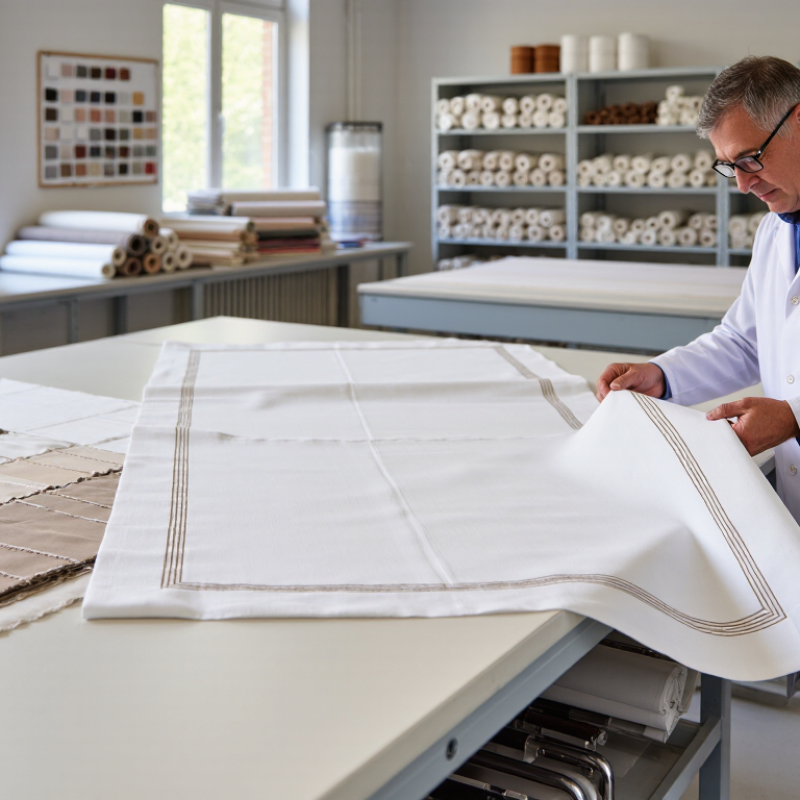
Best Cotton Tablecloth Manufacturers in China?

Cotton Tablecloth Manufacturing in China: An Industry Overview

China’s cotton tablecloth industry is part of a much larger textile network, connecting fabric mills, dye houses, finishing plants, and sewing workshops. This setup can support custom sizes, colors, weights, and hems. Details matter. A heavy cotton cloth may need tighter stitching and careful pre-shrinking to reduce distortion after washing. Buyers should ask for fabric composition, shrinkage results, colorfastness tests, and production samples—not rely on product photos alone.

The China National Textile and Apparel Council reported that China’s textile and apparel exports reached about US$293.6 billion in 2023, down 8.1% year on year. This broad figure, drawn from customs data, shows the scale of the supply chain, but it does not measure tablecloth exports specifically. That distinction is easy to overlook. Cotton origin, fabric construction, and finishing quality can vary between suppliers, even within the same region. A thoughtful factory review should therefore check traceable material records and test reports alongside price and lead time. One weakness remains: sample performance may not fully reflect bulk production, so buyers should agree on measurable quality standards before orders begin.

Key Criteria for Evaluating Chinese Manufacturers

Choosing a cotton tablecloth manufacturer in China starts with measurable requirements, not attractive catalog photos. Specify fiber composition, fabric weight, weave, finished dimensions, and acceptable shrinkage before requesting quotes. Ask for evidence. A clear technical sheet should state whether “cotton” means 100% cotton or a blend, and how fabric weight is measured. Request a sample in the intended color and finish, then wash it using the care method you plan to recommend. Check seam straightness, hem width, color transfer, and dimensional change with a ruler. Small details matter.

Assess production control as carefully as product quality. Ask how incoming fabric is inspected, how defects are recorded, and whether finished pieces receive in-line and final checks. Request relevant test reports for colorfastness and shrinkage, and confirm the tested fabric matches your proposed order. A sample can be excellent while a bulk run varies, so agree on tolerances and approval steps in writing. Review lead times, minimum order quantities, packaging, and the factory’s ability to repeat the same specification. Communication is evidence too: precise answers and dated records are more useful than broad promises. I would still leave room for judgment; inspection plans cannot catch everything, and that is easy to underestimate.

Key Criteria for Evaluating Cotton Tablecloth Manufacturers in China

Suggested evaluation weights for comparing manufacturers. These are a practical buyer’s framework, not market-survey results.

Prioritize fabric and product quality, then verify production capability and compliance with samples, test reports, and factory documentation. Confirm pricing, minimum order quantities, lead times, and customization details in a written quotation.

Leading Cotton Tablecloth Manufacturers and Their Specialties

China’s leading cotton tablecloth manufacturers tend to specialize in different stages of production. Some focus on weaving, offering plain, twill, or jacquard fabrics; others stand out in garment sewing, custom sizing, and hem finishes. Suppliers with in-house dyeing and printing can coordinate color more closely, while export-oriented factories may offer stronger sampling and packaging support. “Best” depends on the buyer’s needs, not just the factory’s catalog. A crisp white cloth for a hotel dining room requires different finishing from a soft, printed cloth for home use.

Textile Exchange’s Materials Market Report 2024 estimates that cotton made up about 20.6 million tonnes of global fiber production in 2023, out of 124 million tonnes overall. This scale makes clear product specifications important. Ask manufacturers to state the fiber composition, fabric weight in grams per square meter, shrinkage tolerance, colorfastness method, and stitching details. Request a sample, then wash and inspect it. Check the edges. A polished product photo cannot confirm fabric feel or color stability, and factory claims still need verification.

Tips: Compare samples under the same light, and measure them after washing. Ask for recent test reports tied to the exact fabric, not a similar style. I would also confirm who handles defects; this detail is easy to overlook.

Materials, Production Processes, and Quality Standards

Choosing a cotton tablecloth manufacturer in China begins with examining the fabric, not just its price. Ask whether the cloth uses combed or carded cotton, and request its weight and weave details. A close, even weave usually feels smoother and helps reduce snagging. Still, heavier fabric is not automatically better; it may drape poorly on a small dining table.

Production details affect how a tablecloth looks after washing. Manufacturers may spin and weave the yarn, dye or print the fabric, then apply finishing treatments and sew the hems. Check whether colorfastness, shrinkage, seam strength, and dimensions are tested on finished pieces. Ask for test records and a production sample. Small details matter.

Tips: Wash a sample according to the care label, then measure it again. Look for twisted hems, uneven color, or loose threads. Ask how inspection results are recorded and what happens when a batch misses the agreed specifications. Some finishes can improve stain resistance but change the hand feel. That trade-off deserves a closer look before ordering.

How to Source Cotton Tablecloths from China

Sourcing cotton tablecloths from China starts with a precise specification, not a broad request for a quotation. State the finished size, fabric weight in grams per square meter, weave, hem width, color tolerance, and expected shrinkage. Ask whether the quoted cotton is combed or carded, and request a sample made from the same fabric and finishing process as the bulk order. Check it after washing. Measure the dimensions, inspect the seams, and note color changes. Small differences matter on a dining table.

Textile Exchange’s Materials Market Report 2024 estimates that global fiber production reached 124 million tonnes in 2023. This scale makes fiber and supplier claims worth verifying. Request documentation showing fiber composition, production location, and any relevant test results; verify certificates with their issuing bodies. Compare quotations on the same basis, including packaging, sample charges, lead time, and delivery terms. Before placing a large order, agree on inspection criteria and what happens if goods fail them. A factory audit can reveal sewing capacity and quality controls, but one visit is only a snapshot. I would not treat a polished sample as proof of consistent bulk quality.

Best Cotton Tablecloth Manufacturers in China? – How to Source Cotton Tablecloths from China

Sourcing dimension What to confirm Practical buyer check
Fabric composition Confirm whether the fabric is 100% cotton or a cotton blend, and request the composition shown on the product specification. Ask for a fabric swatch and have fiber composition tested if it is a contractual requirement.
Weave and finish Specify the weave, such as plain or twill, and any requested finish, such as pre-shrinking, printing, or embroidery. Approve a production sample to check hand feel, color, stitching, and finish before placing a bulk order.
Fabric weight Request the fabric weight in grams per square metre (g/m²); the suitable weight depends on the intended use and desired drape. Compare samples by measured weight as well as appearance; confirm whether the quoted figure refers to finished fabric.
Finished size and shape Provide finished dimensions and shape—rectangular, square, or round—and state the permitted measurement tolerance. Check whether measurements are taken before or after washing, and confirm the tablecloth’s finished hem dimensions.
Color and pattern Specify color references, print artwork, placement, and acceptable variation between production lots. Approve a pre-production sample under suitable lighting and include the approved reference in the order documents.
Shrinkage and colorfastness Agree on testing methods and acceptable results for dimensional change after washing and colorfastness relevant to the product’s use. Request test reports for the actual fabric or finished product, and verify care-label instructions against the results.
Certifications and claims For relevant requirements, verify current documentation and scope. OEKO-TEX STANDARD 100 concerns testing for harmful substances; GOTS applies to certified organic textiles and their processing chain. Check the certificate holder, product scope, validity, and transaction documents; do not treat a factory’s management-system certificate as product certification.
Order quantity and sampling Request the minimum order quantity (MOQ) separately for each size, color, and custom design; MOQs vary by supplier and production setup. Get sample charges, sample lead time, bulk lead time, and any repeat-order conditions in writing.
Quality inspection Agree on inspection timing, defect definitions, measurement checks, packaging checks, and any sampling plan before production. Use an agreed inspection checklist and, where appropriate, an independent pre-shipment inspection.
Quotation and trade terms Compare itemized quotes that identify fabric, size, customization, packaging, tooling, and sample costs. Specify the Incoterms® rule and named place or port. Compare like-for-like quotations; confirm who handles transport, insurance, export formalities, and import clearance under the agreed term.
Packaging and shipping Specify folding, individual packaging, carton quantity, carton markings, and shipping destination requirements. Request carton dimensions and gross weight for freight planning, and confirm labeling artwork before packing.
Supplier verification Check the supplier’s legal business details, production capability, quality procedures, and experience with comparable products. Verify documents independently where possible, request a video or factory audit, and start with a clearly documented sample order.

Note: Specifications, minimum order quantities, prices, and lead times are supplier- and order-specific. Confirm all product requirements, test methods, and trade terms in writing before production.

FAQS

What should I check before choosing a cotton tablecloth supplier?

Check the fabric composition, weight, weave, shrinkage, and colorfastness records. Photos are not enough.

Is heavier cotton always better?

No. Heavy fabric may feel sturdy but drape poorly on a small table. Feel matters.

What should a product sample include?

It should use the same fabric and finishing process planned for bulk production. Wash it, then measure it again.

Which details should I inspect after washing a sample?

Check for changed dimensions, twisted hems, uneven color, and loose threads. Small flaws show up quickly.

What information should a sourcing specification include?

State the finished size, fabric weight, weave, hem width, color tolerance, and expected shrinkage. Be precise.

How can I compare supplier quotations fairly?

Compare the same fabric and specifications. Include packaging, sample charges, lead time, and delivery terms.

Can a factory audit guarantee consistent bulk quality?

No. An audit shows conditions at one point in time. A polished sample is not proof.

What should buyers agree on before placing a large order?

Set measurable inspection criteria and decide what happens if goods miss them. I might still worry about batch variation.

Conclusion

China’s cotton tablecloth industry combines established textile expertise with flexible manufacturing capabilities, serving buyers seeking a range of fabrics, sizes, colors, and finishes. When comparing suppliers, consider their production capacity, communication, customization options, lead times, quality-control practices, and experience with export orders. Manufacturers may specialize in different areas, such as basic household linens, custom designs, or higher-end fabric finishes, so the right choice depends on product requirements and order volume.

Cotton Tablecloths can be made from different cotton fabrics and produced through processes that include weaving, dyeing or printing, cutting, and sewing. Buyers should clarify fabric composition, dimensions, color consistency, stitching, and inspection standards before placing an order. A thoughtful sourcing process includes requesting samples, confirming specifications and packaging, discussing minimum quantities and schedules, and agreeing on how quality will be checked before shipment. These steps help buyers evaluate suppliers and reduce misunderstandings throughout production.


Amelia

Amelia

Amelia is a seasoned marketing professional with a wealth of expertise in our company’s core offerings. With an unwavering passion for driving growth and innovation, she plays a pivotal role in shaping our marketing strategies and enhancing brand visibility. A key aspect of her responsibilities......